

Not investment advice. Disseminated on behalf of Lion Rock Resources Inc. (TSX-V: ROAR | OTCQB: LRRIF).
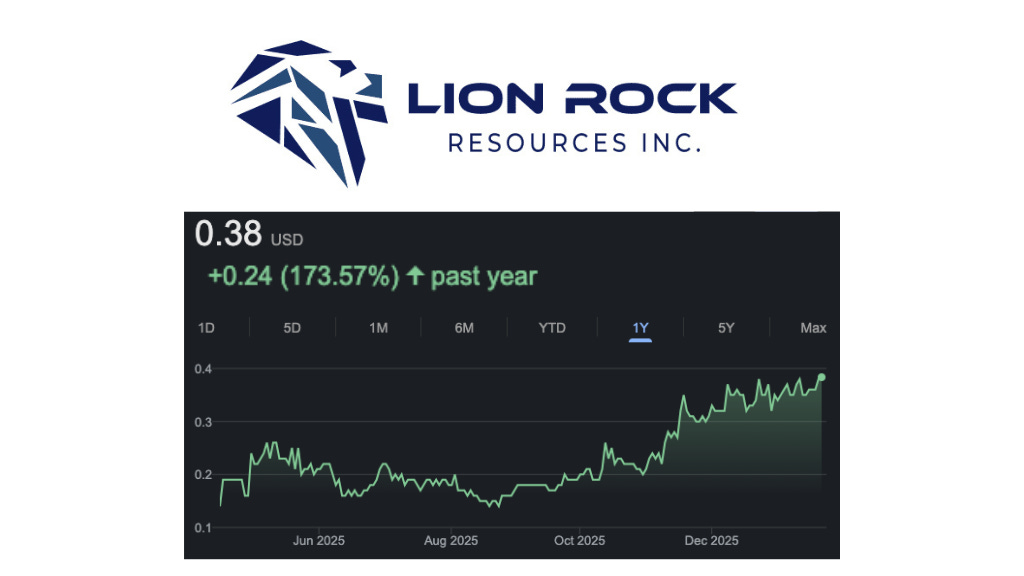
Gold and silver are pushing back toward record levels as investors look for protection from inflation, debt, and geopolitical uncertainty. At the same time, lithium is quietly recovering after a brutal downturn, driven by long-term demand from EVs, batteries, and data centers.
Most companies are exposed to one side of that trade.
Lion Rock Resources sits right at the intersection of both.
The company’s Volney Project, located in South Dakota’s historic Black Hills mining district, is a rare U.S.-based exploration story with exposure to high-grade gold and lithium in the same system. And as of yesterday, the story officially moved into a new phase.
Phase 1 drilling is complete.
What just happened
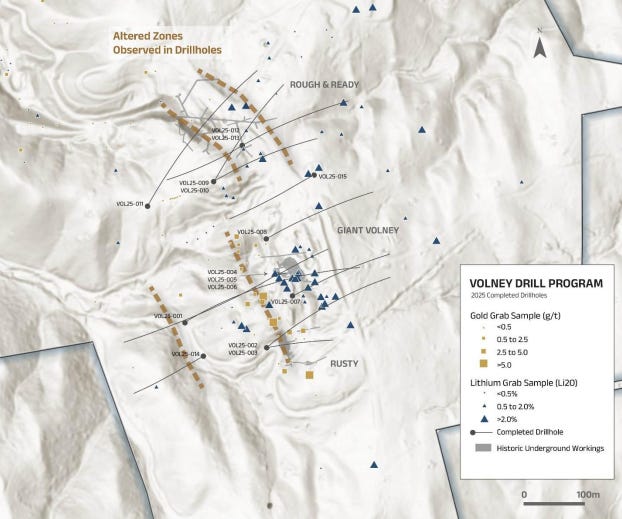
On January 22, Lion Rock announced it has completed Phase 1 of its first-ever modern drill program at Volney. In total, the company drilled approximately 3,600 meters across 15 drill holes, targeting both gold-bearing structures and lithium-bearing pegmatites along the Volney trend.
This is the first time the project has been systematically drilled with modern methods.
The program tested areas around historic workings such as the Giant Volney, Rusty, and Rough & Ready mines, places where high-grade gold and lithium were previously identified at surface, but never properly drilled at depth as a unified project.
What they hit in the drill core
According to the company, drilling intersected multiple sulphide-bearing shear zones with quartz veining and strong alteration (exactly the type of geology associated with gold mineralization in the district). These zones were encountered consistently along the drilled strike length.
Importantly, the drill core shows the same characteristics as surface samples that previously returned gold grades as high as 14.0 g/t.
On the lithium side, Lion Rock confirmed spodumene-bearing pegmatites in multiple drill holes, including long intercepts near the Giant Volney and Rough & Ready areas. One hole intersected spodumene-bearing pegmatites from roughly 48 meters to 77 meters, and again from 103 meters to 120 meters downhole.
These pegmatites occur near surface areas where lithium samples previously graded up to 3.6% Li₂O. Cassiterite and tantalite were also observed in the core, pointing to a broader critical-minerals system.
Assays are now pending
All drill core has been processed and samples have been shipped to SGS in Denver for analysis. The company stated that assay results will be reported as they become available in the coming days and weeks.
This is the key near-term catalyst.
Drilling has confirmed the presence of gold-bearing structures and lithium-bearing pegmatites. Now the market is waiting to see what the lab results say.
Why Volney matters
The Volney Project sits in South Dakota’s Black Hills, one of the most legendary mining regions in North America. Just nearby is the historic Homestake Mine, which produced more than 40 million ounces of gold and proved this district can host world-class deposits.
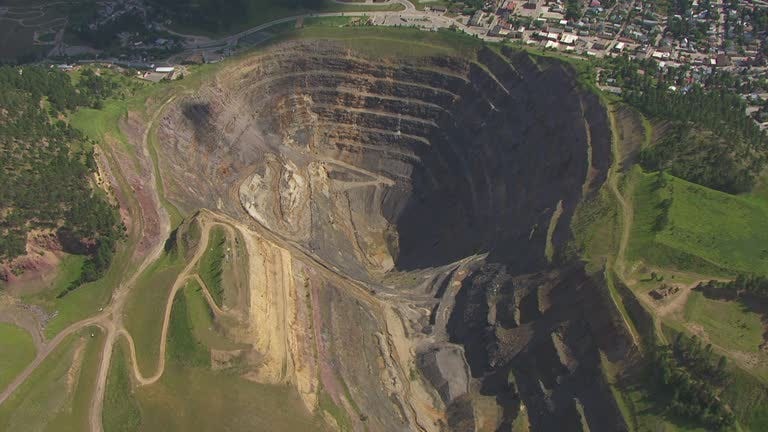
Volney is cut from the same geological cloth, but much of it was never tested with modern drilling.
At the center of the project is the Giant Volney pegmatite, a 635-meter-long lithium-cesium-tantalum system that remains untested at depth. Surface work already confirmed lithium mineralization, and Lion Rock is now drilling beneath the old workings for the first time.
The advantage here is speed. Volney sits on private land with surface and mineral rights, allowing year-round access and faster permitting, a rare edge for a U.S. exploration story.
Lion Rock’s Phase 1 program wasn’t one-dimensional. The company drilled gold targets, lithium targets, and zones where both overlap, intersecting sulphide-rich gold structures and spodumene-bearing pegmatites along the same trend.
Gold thrives when uncertainty rises. Lithium underpins electrification, batteries, and AI infrastructure.
Lion Rock is positioned in both stories at the same time.
What comes next
Management has made it clear that Phase 1 was about understanding the system. With drilling complete and assays pending, the company is already preparing for an expanded Phase 2 program, which will be refined as results come in.
As CEO Dale Ginn put it, Phase 1 highlighted Volney’s potential as a multi-commodity system with relevance to both precious metals and critical minerals.
The next move depends on the data.
The bottom line
Lion Rock is an early-stage exploration story. The Upcoming drill results will provide important information.
But the setup is now clear.
The company has completed its first modern drill program in a historic U.S. mining district. It has confirmed gold-style alteration, spodumene-bearing lithium pegmatites, and a geological system that supports both metals. And it is entering a news-driven period with assays expected in the near term.
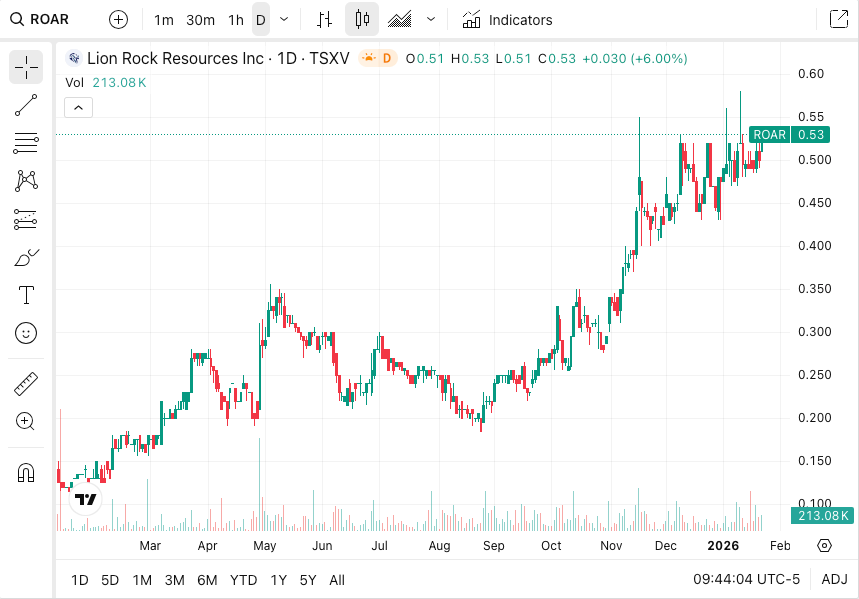
For investors watching gold, lithium, or both, Lion Rock Resources is moving into a phase where information flow (not speculation) will start to drive the story.
Disclaimer:
This content was produced on behalf of Lion Rock Resources (TSXV:ROAR OTC:LRRIF) and sponsored by the company. The influencer was compensated two thousand five hundred dollars by Research Stock Digest to create this content. This is not financial advice, and viewers are encouraged to consult a financial professional before making investment decisions. Investing in companies involves significant risks, and past performance does not guarantee future results. Please do your own research.