

Not investment advice. Disseminated on behalf of GreenLight Metals Inc.
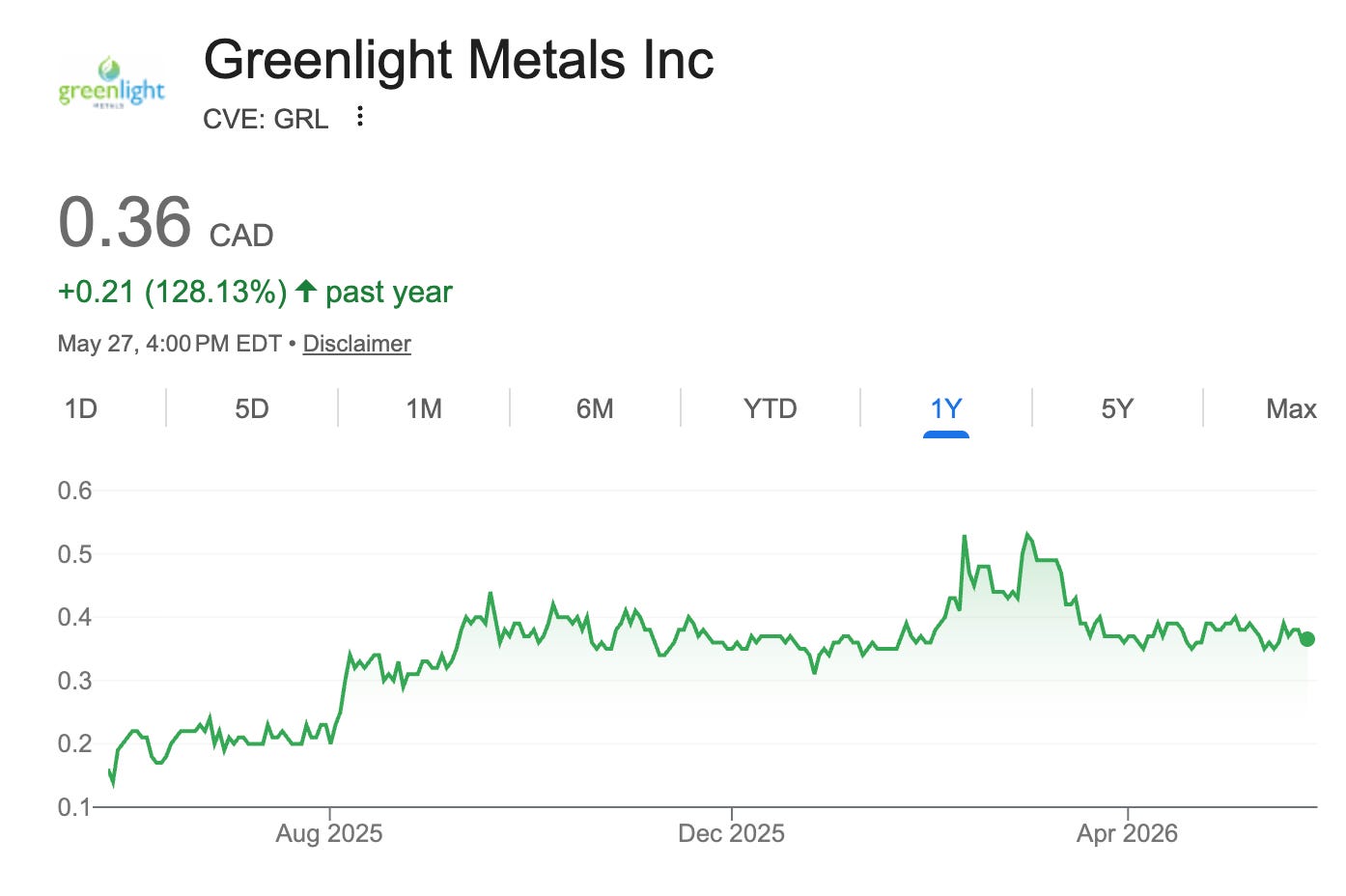
(TSX-V: GRL | OTCQB: GRLMF)
In the mid-1990s, Wisconsin passed one of the strictest mining moratoriums in U.S. history. It effectively banned all non-ferrous metal mining in the state. For over 20 years, no one could drill for copper, gold, or zinc in one of the most mineralized volcanic belts in North America.
The Penokean Volcanic Belt shares the same geological signature as Canada’s Abitibi and Flin Flon mining camps, districts that have collectively produced billions of dollars in metals. But while those Canadian belts were being explored, drilled, and developed, Wisconsin’s was frozen. Known deposits couldn’t be advanced. New discoveries couldn’t be made. Capital stayed away entirely.
That moratorium was repealed in 2017.
GreenLight Metals (🇨🇦GRL / 🇺🇸GRLMF) was the first company to move in. They consolidated the best assets, secured permits, assembled a technical team, and started drilling. They are the only company actively exploring copper-gold targets in this reopened belt today.
And they have two rigs turning right now.
The belt reopened into the strongest metals market in history
Here’s what makes the timing remarkable. When Wisconsin’s mining belt was last active, copper was around $1 a pound. Today it’s above US$5.75, near all-time highs. Gold has surged past US$3,300 an ounce. Silver is above US$33. And tellurium, a critical mineral found at GreenLight’s flagship project, is in a sustained uptrend driven by solar panel demand.
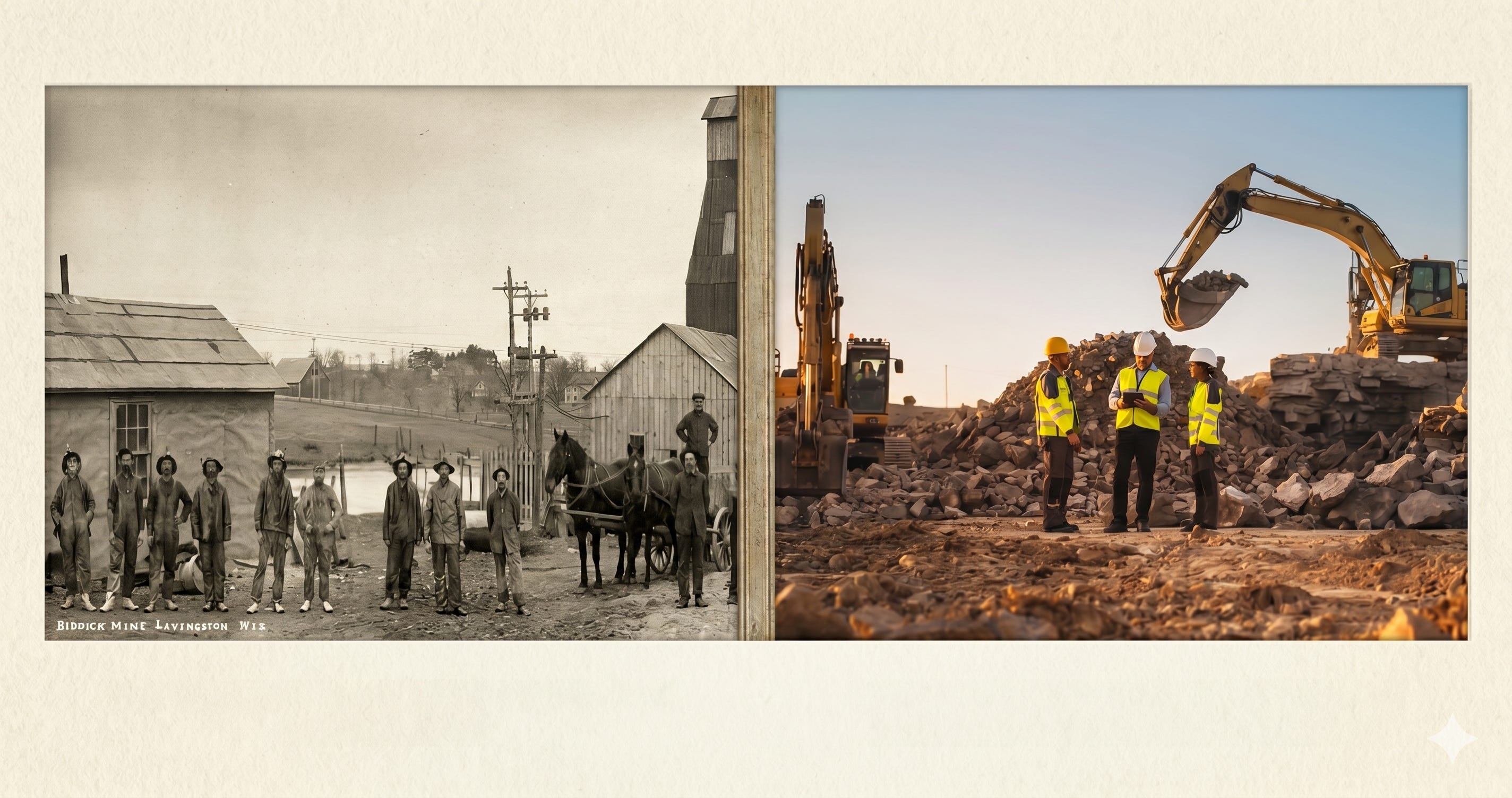
Every metal in the ground is worth multiples of what it was when this belt was last active. The economics of exploration here have been completely transformed by the commodity cycle, and GreenLight is the only company in the district positioned to benefit from it.
At the same time, the U.S. government is treating domestic critical mineral supply as a national security priority. Executive orders are fast-tracking permitting for American mining projects. Wisconsin didn’t just lift the moratorium, it modernized the entire regulatory framework to support responsible exploration. The policy tailwinds and the commodity tailwinds hit at exactly the same moment.
Bend: six holes drilled, six holes hit
GreenLight’s flagship is the Bend Project in northern Wisconsin, a copper-gold VMS system about 35 miles from the past-producing Flambeau Mine. This isn’t starting from scratch. Prior operators invested over US$8 million into Bend, drilled more than 22,000 meters across roughly 50 holes, and outlined a historical resource estimate of approximately 4.0 million tonnes. Mineralization has been traced over 330 meters of strike and 600 meters vertically, and large portions of the system have never been tested.
GreenLight completed a six-hole Phase 1 drill program in 2025 and hit copper-rich VMS mineralization in every single hole. The best hole returned 34.25 meters averaging 3.74% copper equivalent, including 22.24 meters of 3.02 g/t gold and 2.03% copper. Visible gold was observed in drill core at 290 meters depth.
For a program that cost just under C$1 million, they added approximately 150 meters of new strike to the deposit. A 100% hit rate across six holes, with grades and thickness increasing at depth, is the kind of result that tells you the system is real and growing.
Note: The historical resource estimate referenced for Bend is not compliant with current CIM Definition Standards or NI 43-101. A qualified person has not done sufficient work to classify it as a current mineral resource. The company is not treating it as a current resource. Visible gold is not necessarily indicative of the gold grade of any mineralized interval.
Phase 2 is underway with two rigs
GreenLight has launched a fully funded Phase 2 drill program at Bend, targeting up to 7,000 meters across 15 permitted pads with two diamond drill rigs. Initial Phase 2 results from hole B26-007 returned 30.7 meters of 2.49% copper equivalent, including 14.9 meters of 3.65% CuEq.
The program is testing down-plunge and down-dip extensions of the high-grade system with the goal of advancing toward a modern NI 43-101 compliant mineral resource estimate. With two rigs turning and assays pending on multiple holes, investors can expect a steady stream of news flow throughout 2026.
Barrick Gold signed a binding deal on their Nevada project
In May 2026, GreenLight announced a binding term sheet with Barrick Gold for a proposed staged earn-in at the Kalium Canyon project in Nevada. Barrick can earn up to 80% by spending US$20.5 million on exploration and making US$1 million in cash payments.
When one of the largest gold miners on Earth signs a binding deal with a sub-C$50 million explorer, it tells you the geology is credible and the team is serious. Barrick doesn’t put their name on projects that don’t meet their technical threshold.
For GreenLight shareholders, it means Kalium Canyon gets explored at Barrick’s expense, while the company’s own resources stay focused on drilling Bend.
A critical mineral most investors don’t know about
Beyond copper and gold, Bend is showing significant tellurium values. Tellurium is a critical mineral used in advanced solar panel technology, specifically cadmium telluride panels. Multiple samples from Bend have exceeded 500 g/t tellurium, and the main massive sulfide interval averages above 350 g/t.
Rio Tinto recently built a dedicated tellurium processing plant at its Kennecott Mine to meet surging demand from the solar sector. The tellurium component at Bend could open up government-level funding mechanisms for critical mineral development, adding another layer of strategic value on top of the copper and gold.
C$11.5 million in the bank, sub-C$50 million market cap
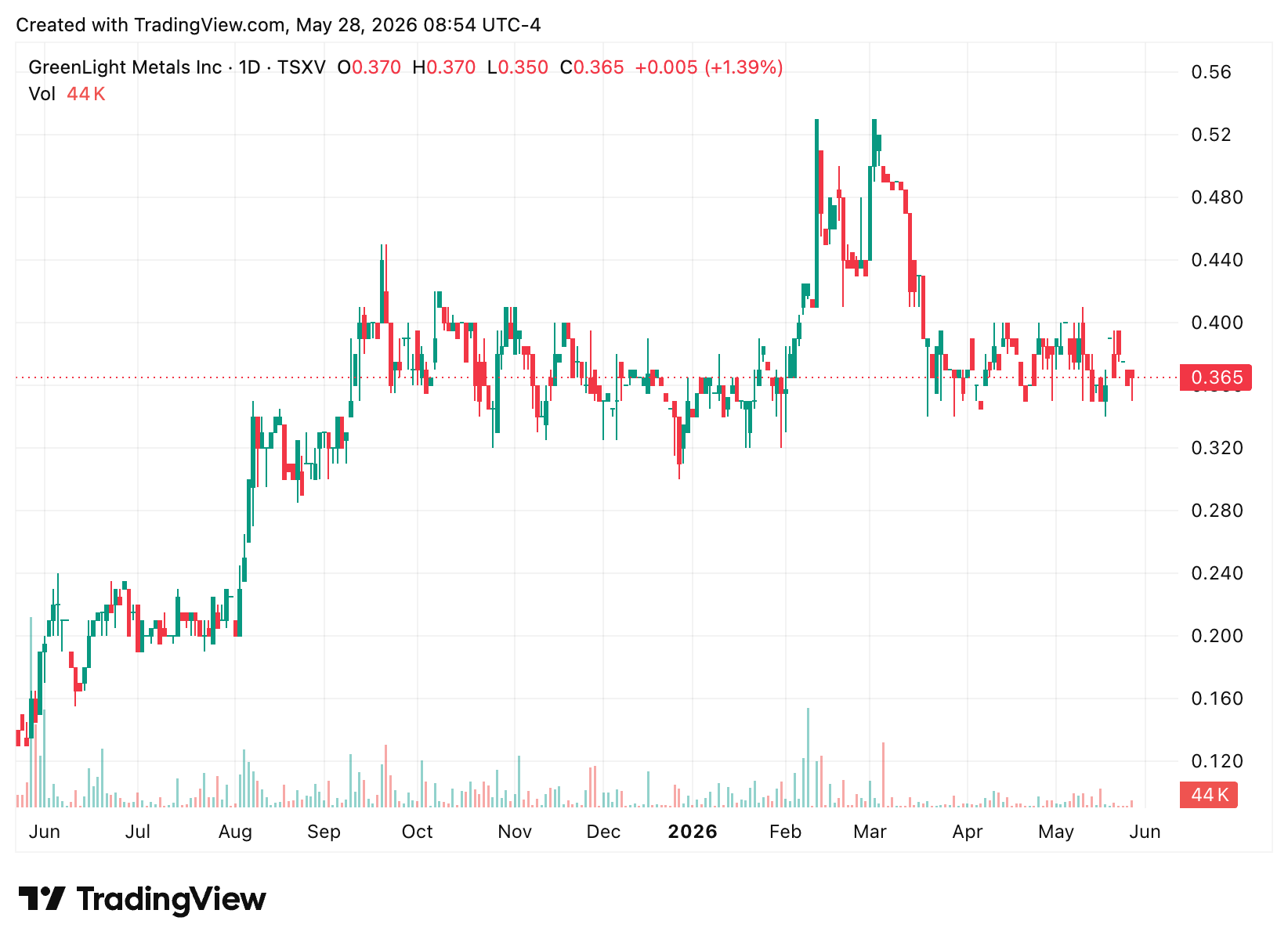
GreenLight recently completed a C$11.5 million financing, giving the company a strong balance sheet to execute Phase 2 and advance its broader portfolio. With approximately 100 million shares outstanding and a market cap below C$50 million, the share structure is tight relative to the asset base.
Beyond Bend, GreenLight controls Reef, a high-grade gold-copper system, plus Lobo and Lobo East, VMS discovery targets near the world-class Crandon deposit. None of those are priced into the current valuation. Neither is the Barrick earn-in.
The bottom line
GreenLight Metals (🇨🇦GRL / 🇺🇸GRLMF) is the sole first mover in a world-class mining belt that was locked up for over 20 years, now reopened into the strongest metals market in history.
Phase 1 hit mineralization in all six holes, including visible gold alongside high-grade copper. Phase 2 has two rigs turning right now. Barrick Gold signed a binding deal on their Nevada project. The company has C$11.5 million in the bank. And the market cap is below C$50 million for the only company actively drilling copper-gold in the entire Penokean Belt.
Most investors don’t know this district just reopened. Most haven’t heard of GreenLight. And most aren’t watching the drill results that are about to start flowing. That gap between what’s happening on the ground and what the market is pricing is exactly the kind of disconnect that changes when the news catches up.
The ticker is GRL on the TSX Venture, or GRLMF on the US OTC.
Disclaimer: Disseminated on behalf of GreenLight Metals Inc. This newsletter is for informational purposes only and is not investment advice. It is part of a paid marketing campaign. Cashu Group was compensated by GreenLight Metals Inc. for the creation and distribution of this content. The historical resource estimate referenced for Bend is not compliant with current CIM Definition Standards or NI 43-101, and the company is not treating it as a current resource. Visible gold occurrences are not necessarily indicative of the gold grade of any mineralized interval. The Barrick term sheet is binding but the long-form agreement has not yet been finalized, and there is no certainty Barrick will complete its earn-in. Investing in early-stage exploration companies is speculative and involves significant risk, including the risk of loss of capital. All drill results, project details, and financial figures referenced come from the company’s public disclosures. Always do your own due diligence and consult a licensed financial professional before making investment decisions.