

Not financial advice. Disseminated on behalf of Trigg Minerals Ltd.
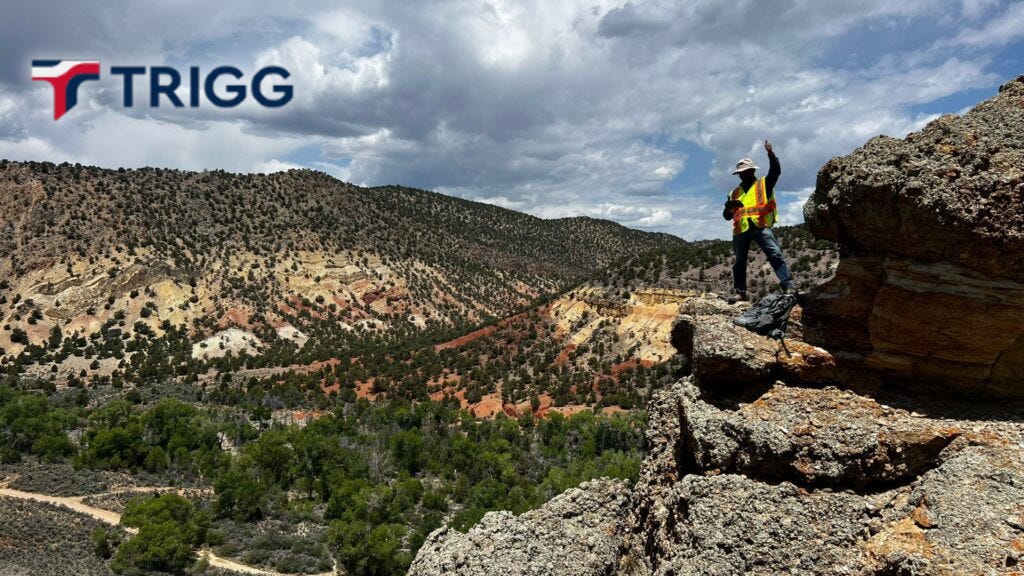
Most investors watching the commodities boom know about copper, lithium, uranium and rare earths. Almost none are paying attention to the minerals the defense sector is most worried about: antimony and tungsten.
These are the metals used in military-grade alloys, semiconductors, ammunition, flame retardants, renewable energy systems and advanced manufacturing. They are considered essential for national security. And nearly all of the Western world’s supply comes from one place: China.
When Beijing restricted exports earlier this year, it sent a clear message. The West does not control its own critical mineral lifelines.
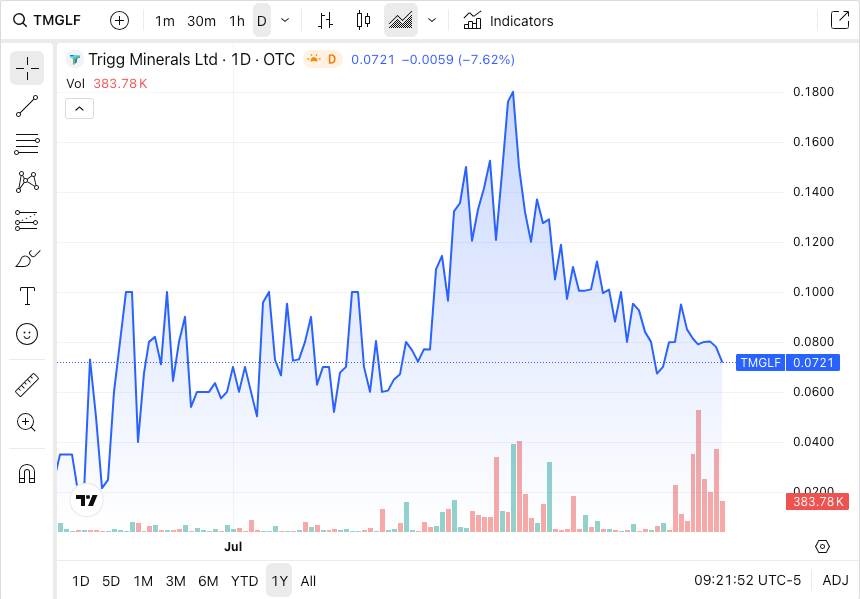
That’s the backdrop behind Trigg Minerals, a small ASX- and OTC-listed explorer rapidly positioning itself to become one of the first vertically integrated antimony and tungsten suppliers in the United States.
The company is advancing three core assets with a single objective: enter production by 2027.
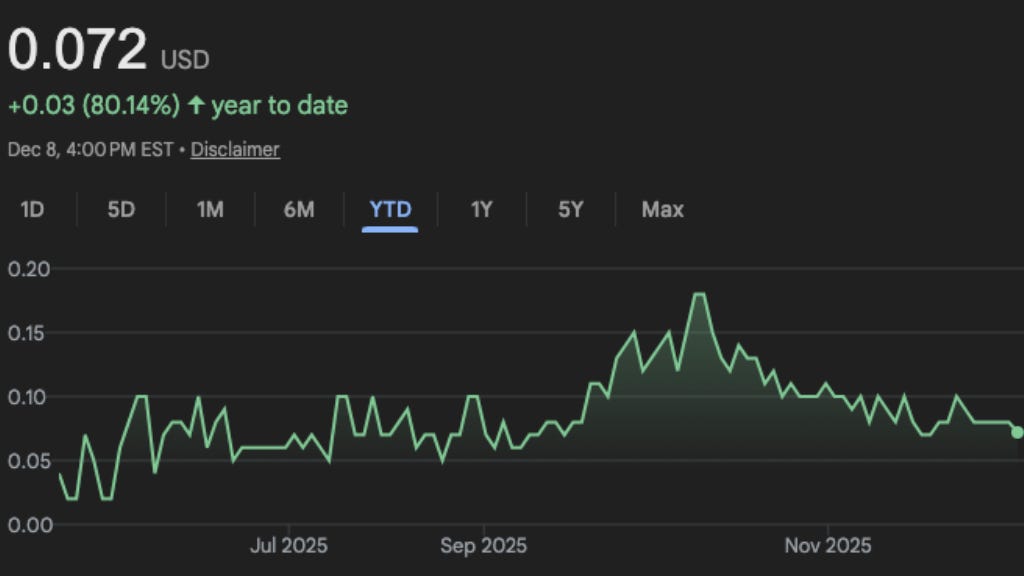
A company racing toward production
In a recent interview, Managing Director Andre Booyzen described the strategy plainly. Trigg wants to explore, mine, process and ultimately refine antimony inside the United States. No offshore bottlenecks, no dependence on foreign processors, no vulnerability to geopolitical supply shocks.
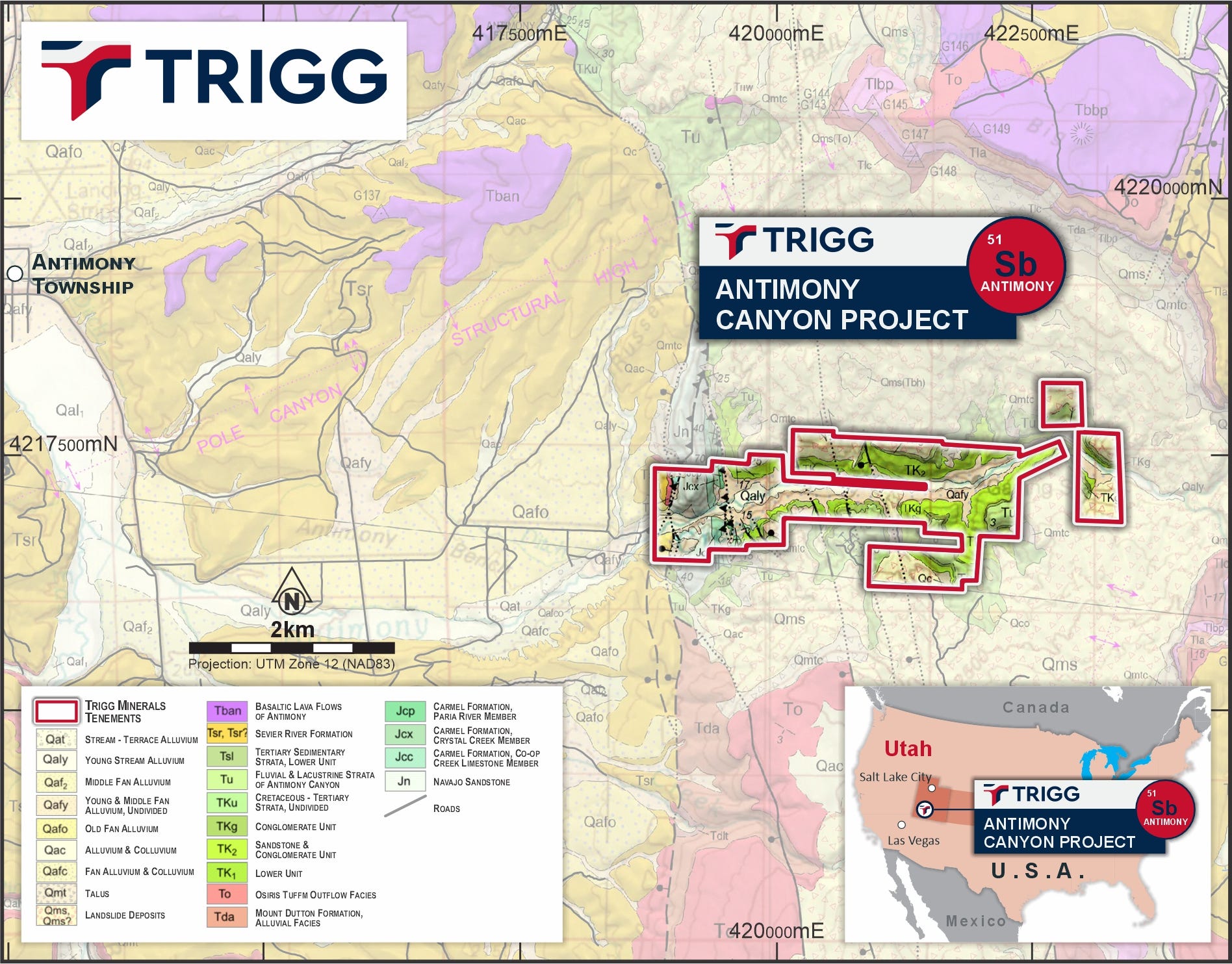
The path toward that vision starts with the Antimony Canyon Project in Nevada. It is one of the highest-grade undeveloped antimony systems in the U.S. and carries a significant exploration target that could support long-term domestic supply. Tennessee Mountain, the company’s tungsten project, adds another key critical mineral with strong historical production and a large claim position. Both are being advanced with the expectation of first production in 2027.
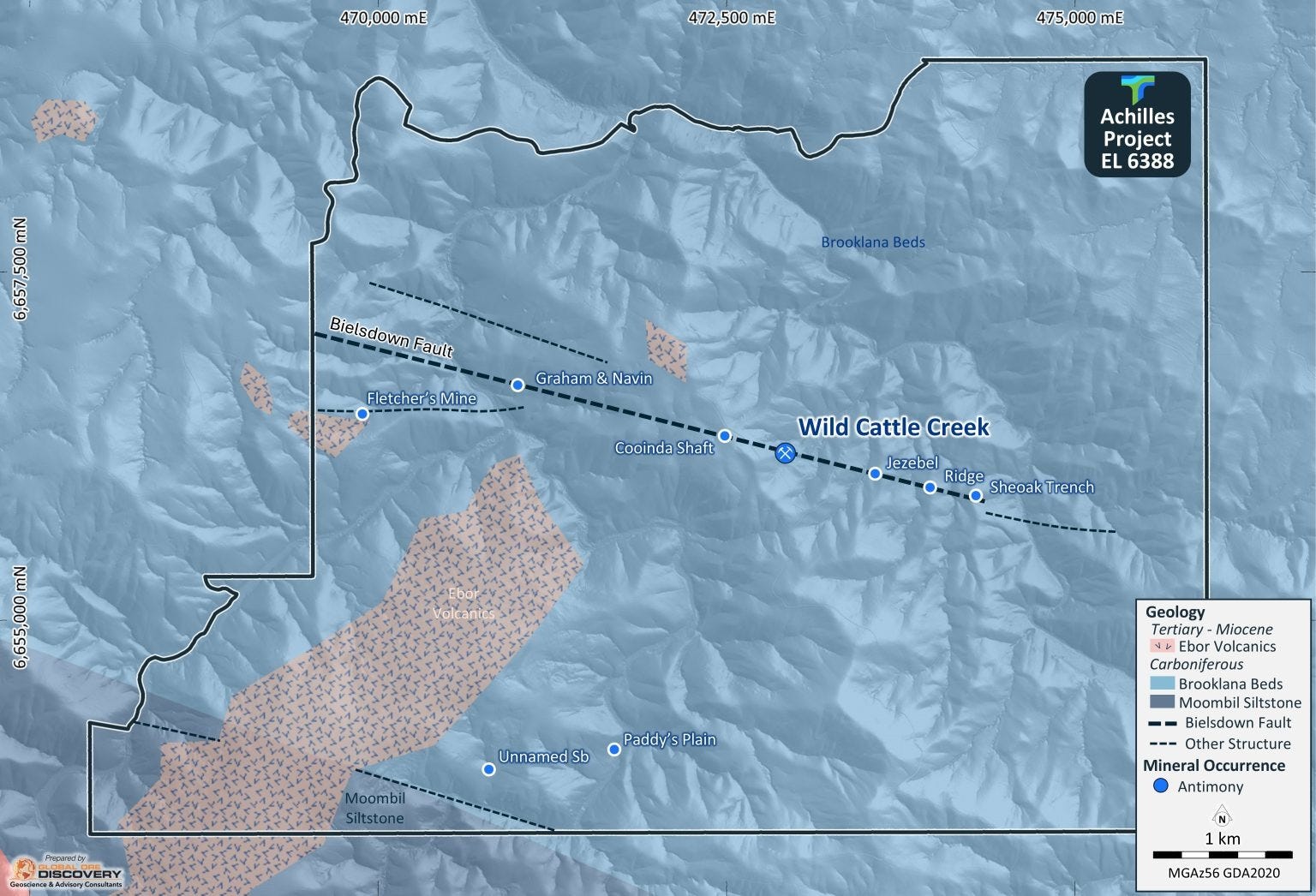
At the same time, Trigg is pursuing one of the strongest antimony projects in Australia. Wild Cattle Creek in New South Wales hosts the country’s highest-grade undeveloped primary antimony resource and strengthens the company’s global pipeline.
Together, these assets form a rare portfolio: high-grade antimony and tungsten in Tier-1 jurisdictions, aligned with what the U.S. government has openly stated it wants more than anything else right now — secure, domestic supply.
A perfect storm of policy, geopolitics and demand
When China cut off exports of key metals this year, Western governments responded fast. From the Pentagon’s stockpiling programs, to new fast-track U.S. permitting pathways, to federal funding initiatives under FAST-41, the direction is obvious. Friendly-jurisdiction projects with critical minerals are now receiving more support and attention than ever before.
Trigg has already begun engaging with these U.S. programs. The company is preparing applications for federal funding avenues and positioning its projects to qualify for future incentives tied to national security supply chains.
The message from leadership is clear. They want to move Antimony Canyon and Tennessee Mountain into production as quickly as possible. And with China tightening exports, the strategic case is stronger than at any time in the past decade.
Why antimony and tungsten matter
Antimony is used to harden lead and metals for military ammunition, energy storage systems, specialized alloys, fire-resistant materials and advanced battery chemistries. The U.S. currently produces almost none of it.
Tungsten has one of the highest melting points of any metal, making it essential for aerospace components, high-temperature manufacturing, drilling tools and defense systems.
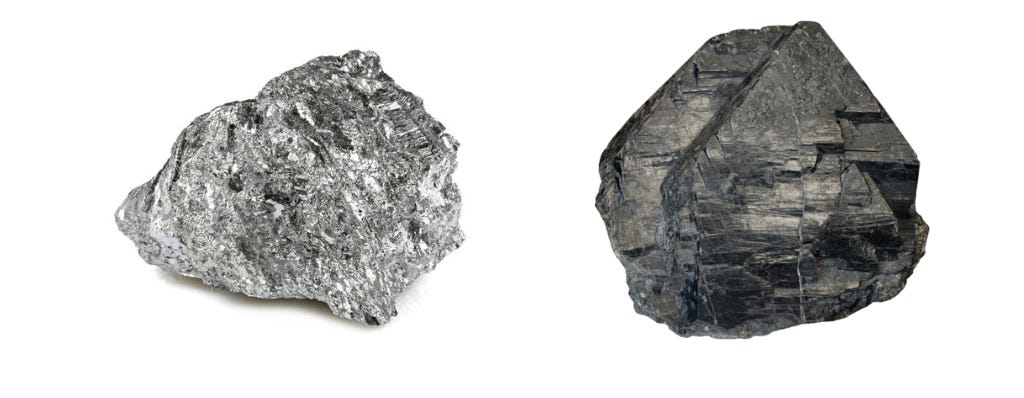
Both minerals are classified as critical by the U.S. government. Both face near-total reliance on Chinese supply. And both are required in growing volume as electrification, defense spending and industrial automation accelerate.
A junior with a major ambition
Most small-cap explorers talk about long-term development timelines. Trigg’s leadership is doing the opposite. They have set a target to begin mining in 2027. Whether they hit that timeline will depend on permitting and funding, but the ambition is significant.
Trigg is also evaluating downstream processing with industry partners like Metso, exploring a pathway to produce refined antimony domestically. That is the bottleneck the U.S. does not currently have a solution for.
Investors should understand what that means. A successful vertically integrated North American antimony supply chain would be strategically important to government, industry and defense. And very few companies are even attempting it.
The bottom line
Trigg Minerals is positioning itself in front of one of the most powerful trends in natural resources: the reshoring of critical mineral supply chains. With projects in Nevada, Idaho and Australia, fast-moving plans for production, and direct alignment with U.S. national security priorities, the company is quietly becoming one to watch in the critical metals space.
It’s still an early-stage story, but one with a clear strategy and a tight link to global policy shifts that are only accelerating.
For investors following the rise of strategic minerals, Trigg offers a front-row seat as Western governments race to rebuild the supply chains they once took for granted.
Disclaimer: This newsletter was created on behalf of Trigg Minerals Ltd. and sponsored by the company. Cashu Technologies was compensated two thousand dollars by Connect 4 Marketing. This is not investment advice. Always conduct your own due diligence and consult a licensed financial professional before making investment decisions.