

Not investment advice. Disseminated on behalf of SMX (Security Matters) PLC.
(NASDAQ: SMX)
There’s a shift happening in global supply chains that most investors haven’t fully processed yet.
For decades, the way companies tracked physical materials was essentially: paperwork. Certificates of origin. Supplier claims. Disconnected databases that could be delayed, manipulated, or flat-out wrong. When you bought a product that said “recycled content” or “ethically sourced,” you were mostly taking someone’s word for it.
That system is breaking down.
Governments are cracking down on sustainability claims. Regulators are demanding proof of recycled content. Manufacturers need to verify what’s actually in their supply chain, not just what a document says is in it. And geopolitical instability is making the whole question of “where did this material come from” a lot harder to answer.
The world is moving from “trust me” to “prove it.” And SMX (Security Matters) PLC is building the infrastructure for that transition.
Molecular-level identity for physical materials
Here’s what SMX actually does, because it’s different from most supply chain tracking companies.
Instead of slapping a barcode or RFID tag on a product, SMX embeds invisible molecular markers directly into the material itself. Plastics, metals, fuels, textiles, industrial commodities. The marker becomes part of the material. It can’t be removed, swapped, or faked.
That means the material carries its own identity. You can verify what it is, where it came from, whether it’s been recycled, and what its lifecycle history looks like, all by scanning the material itself rather than relying on a paper trail.
It’s a fundamentally different approach to verification, and it solves a problem that’s getting bigger every year.
The Digital Material Passport Platform just went live
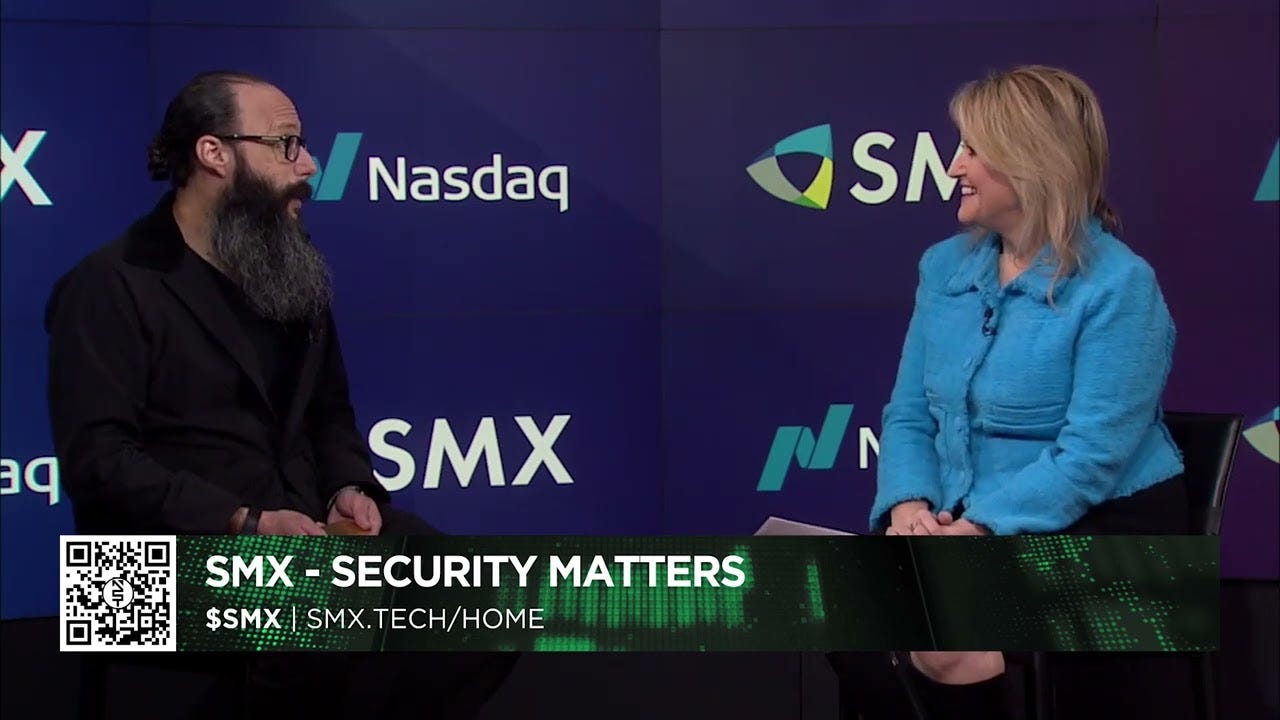
In April 2026, SMX launched its Digital Material Passport Platform. This is the system that connects those physical molecular markers to secure digital records, creating a verifiable chain of custody for any material that moves through a supply chain.
The platform supports real-time traceability, compliance verification, authentication, and lifecycle tracking across global commerce. It includes interactive dashboards, blockchain-backed transaction histories, and integrated document management tied directly to physical materials.
SMX gave existing clients and partners early access in April to test the platform and validate use cases. As of May 2026, the company has opened bookings for new clients across plastics, metals, and other industrial materials.
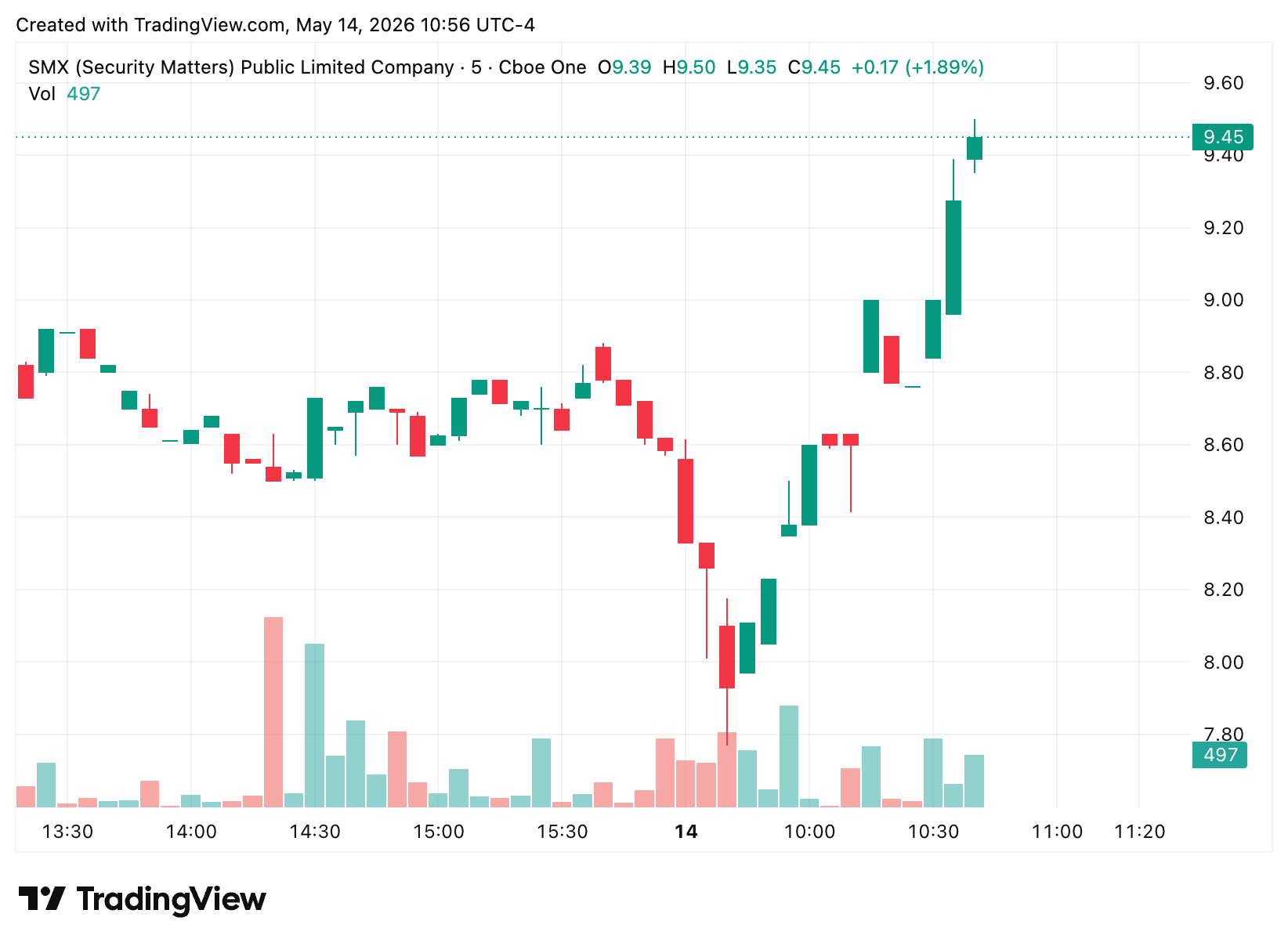
The market noticed. On launch day, the stock surged to an intraday high of $19.68 before settling back. That kind of reaction tells you the market sees the potential, even if the story is still early.
Why the timing matters
SMX isn’t just solving a theoretical problem. The forces pushing demand for this kind of technology are accelerating on multiple fronts at once.
Inflation is pressuring supply chains. Energy volatility is disrupting commodity markets. Governments worldwide are rolling out stricter environmental regulations, recycled-content mandates, and carbon compliance frameworks. And companies across manufacturing, packaging, energy, and industrial production are being told: prove your claims, or face consequences.
The recycling angle is particularly interesting. For years, recycled plastic struggled to compete with virgin plastic because verification was messy and expensive. But rising oil prices are driving up the cost of virgin production, while regulations are making recycled content mandatory in more and more applications. The economics are flipping.
The missing piece has always been trust. Manufacturers need to know recycled materials are legitimate, uncontaminated, and accurately labeled. Without that confidence, the entire circular economy has a friction problem.
SMX’s molecular tagging is designed to solve exactly that. If they can become the verification standard for recycled materials, the addressable market is enormous.
Not just recycling
The technology applies well beyond plastics and recycling. Think about any industry where material authenticity matters: metals used in defense manufacturing, fuels moving through international markets, textiles making sustainability claims, industrial commodities crossing borders.
Every one of those supply chains has a trust gap. Every one of them is facing tighter regulation. And every one of them needs a way to verify what’s real without depending entirely on external documentation.
SMX is positioning its Digital Material Passport as the infrastructure layer underneath all of that. If they execute, they’re not a niche sustainability play. They’re a verification infrastructure company sitting at the center of how global trade proves what it’s actually trading.
The bottom line
SMX (NASDAQ: SMX) is an interesting company at an interesting moment.
The thesis isn’t complicated: the global economy is being forced to move from paper-based trust to embedded, verifiable proof. Supply chains need it. Regulators are demanding it. And the economics of recycling are making it financially necessary, not just environmentally desirable.
SMX has built a molecular-level verification technology that gives physical materials their own digital identity, and they just launched the platform to commercialize it. The market reacted strongly to the launch in April. New client onboarding is underway. And the macro tailwinds pushing demand for this kind of infrastructure aren’t slowing down.
Whether SMX becomes the standard or one of several players in the space is the open question. But the problem they’re solving is real, the timing is right, and the platform is live. That combination makes it a name worth watching closely.
The ticker is SMX on the NASDAQ.
Disclaimer: Disseminated on behalf of SMX (Security Matters) PLC. This newsletter is for informational purposes only and is not investment advice. It is part of a paid marketing campaign. Cashu Group was compensated by SMX (Security Matters) PLC for the creation and distribution of this content. Investing in small-cap companies involves significant risk, including the risk of loss of capital. All product details and platform information referenced come from the company’s public disclosures. Always do your own due diligence and consult a licensed financial professional before making investment decisions.