

Not financial advice. Disseminated on behalf of PowerBank Corporation (NASDAQ: SUUN).
There is a moment in every major technological shift when the real bottleneck becomes impossible to ignore. For the AI boom, that moment has arrived. It isn’t chips. It isn’t bandwidth. It’s power.
Data centers, cloud networks, and AI training farms are now consuming electricity at a pace the existing grid was never designed for. Analysts expect U.S. renewable power demand to increase roughly 10 percent per year through 2030. Nearly every major trend in modern technology requires more energy, delivered more reliably, with lower carbon intensity.
And this raises the question investors are beginning to ask: who will actually supply the clean, decentralized power these systems require?
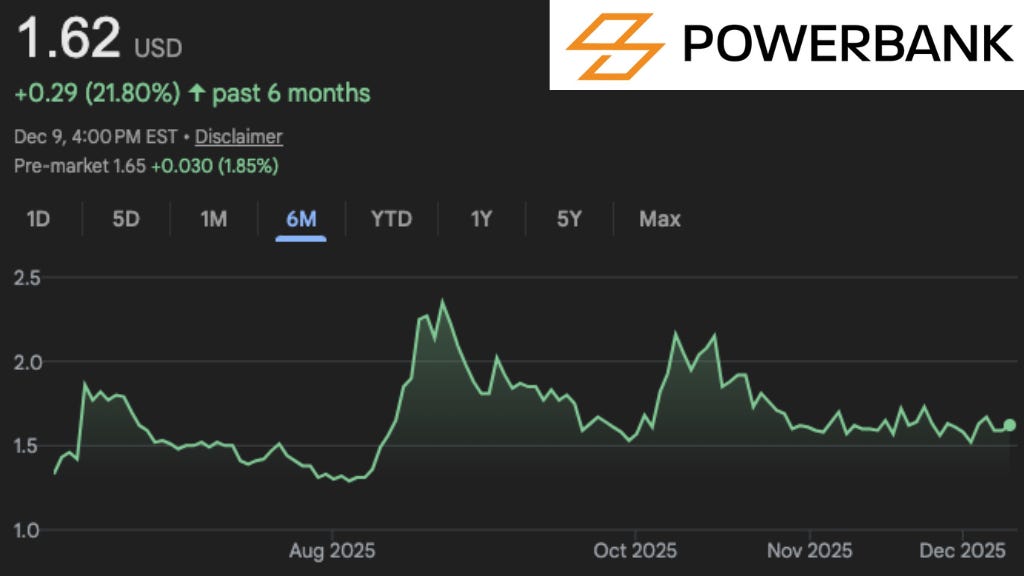
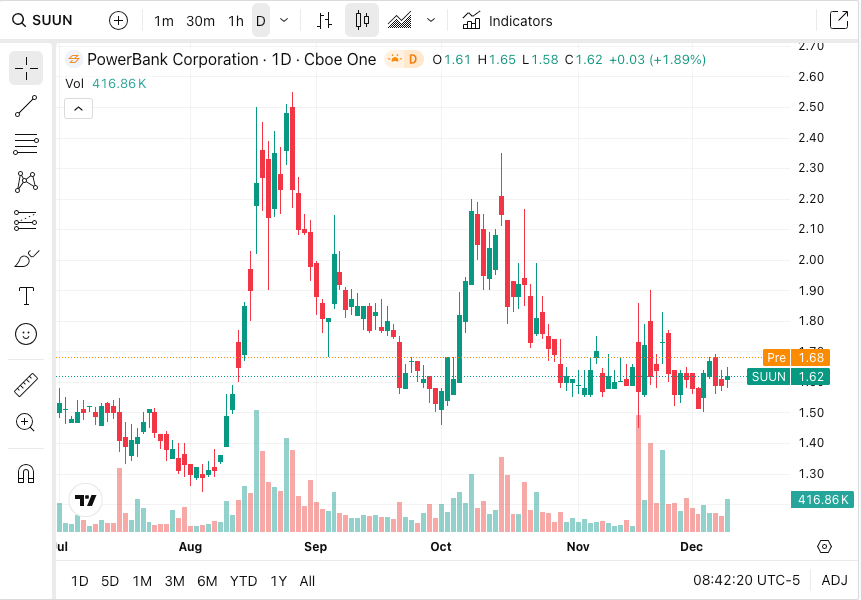
PowerBank Corporation (NASDAQ:SUUN) is one of the few small-cap companies already operating at that intersection. The company has more than 70 active energy assets in service today, over 100 megawatts delivered for Fortune 500 clients, a one-gigawatt development pipeline, and an owned asset base that is now generating recurring revenue. Yet the stock trades around US$1.65 with a market cap near CA$89 million.
For a company rapidly scaling into an independent power producer, that valuation sits well below comparable names that own and operate distributed solar and storage fleets.
A different kind of energy company
PowerBank (NASDAQ:SUUN) isn’t a concept-stage developer. It is already running dozens of solar and storage assets across North America, while building out new projects for utilities, restaurant chains, global technology companies and, increasingly, large-scale commercial clients.
The business model is straightforward: develop, build, operate, and ultimately own power assets that generate predictable revenue through long-term agreements. The company handles everything internally, from early permitting to engineering, construction, operations, and maintenance.
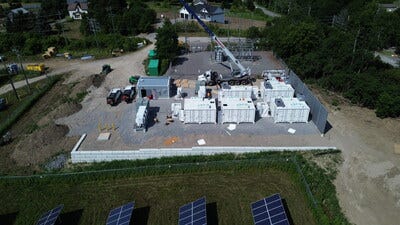
That vertical structure matters. It means PowerBank captures more margin, moves faster than siloed competitors, and can balance between one-time project income and recurring income from assets on its own balance sheet.
Behind the meter, on the grid, and everywhere in between
PowerBank has established itself in two of the fastest-growing segments of the energy market.
Community solar has become one of the most important ways to deliver clean power directly to local consumers. PowerBank (NASDAQ:SUUN) has delivered dozens of these projects in the United States, including in markets like New York where demand is strong and incentives are stable.
Commercial and industrial behind-the-meter systems are another major driver. These are rooftop or ground-mounted solar and storage units installed directly at customer facilities. The electricity produced is consumed onsite, meaning lower electricity bills, reduced grid strain, and improved ESG performance for the customer.
This positions PowerBank squarely within the highest-demand categories of the renewable energy cycle—categories benefiting from both policy momentum and real commercial demand.
Real customers, real contracts, real revenue
The most compelling part of the PowerBank story is the roster of clients that have already validated its capabilities.
Honeywell selected PowerBank to develop and build 21 megawatts of solar capacity across three sites in New York. PowerBank remained responsible for long-term technical operations, creating recurring service income on top of the initial project value of more than US$41 million.
Charley’s Philly Steaks hired PowerBank to deliver nine solar projects totaling 40 megawatts, again with PowerBank contracted for continuing operations. The combined contract value reached roughly US$60 million.
Hanwha Qcells partnered with PowerBank on four sites totaling 26 megawatts, valued at approximately US$50 million.
Taken together, these projects represent more than 87 megawatts and US$150 million in transaction value with top-tier customers. For a company under CA$90 million in market capitalization, this track record is significant.
Scaling the owned asset base
While PowerBank has historically built and sold projects, the next phase of growth is centered around owning more of its power generation. The company currently operates dozens of solar parks from its acquisition of Solar Flow-Through Funds, a 29-megawatt portfolio in Ontario generating approximately CA$9.2 million in recurring annual revenue.
PowerBank is also advancing a 4.99-megawatt storage asset in Ontario with financing support from the Royal Bank of Canada. A second facility remains in progress, pending additional regulatory steps.
Most notable is the announced plan with CIM Group. The financing package is expected to support construction of 21 new solar projects totaling 97 megawatts. Unlike previous builds, these assets are intended to remain under PowerBank’s ownership.
This shift—toward independent power producer status—is where valuation re-rates tend to occur.
A triple tailwind: technology, policy, and electrification
Solar and storage are now among the lowest-cost sources of new electricity generation. U.S. policy incentives, including federal tax credits, are accelerating new project construction. And the rise of AI-driven power consumption presents an entirely new market segment that is expanding faster than traditional utilities can respond.
PowerBank is already evaluating purpose-built solutions for data centers and digital infrastructure. These customers increasingly require dedicated, localized energy with storage support—precisely the kind of distributed systems PowerBank is developing.
For investors looking at the long-term energy landscape, this shift is meaningful. Artificial intelligence is not just a technology bet; it is a power bet. And the companies that can deliver scalable, renewable power close to end users are positioned to benefit most directly.
A valuation that hasn’t caught up
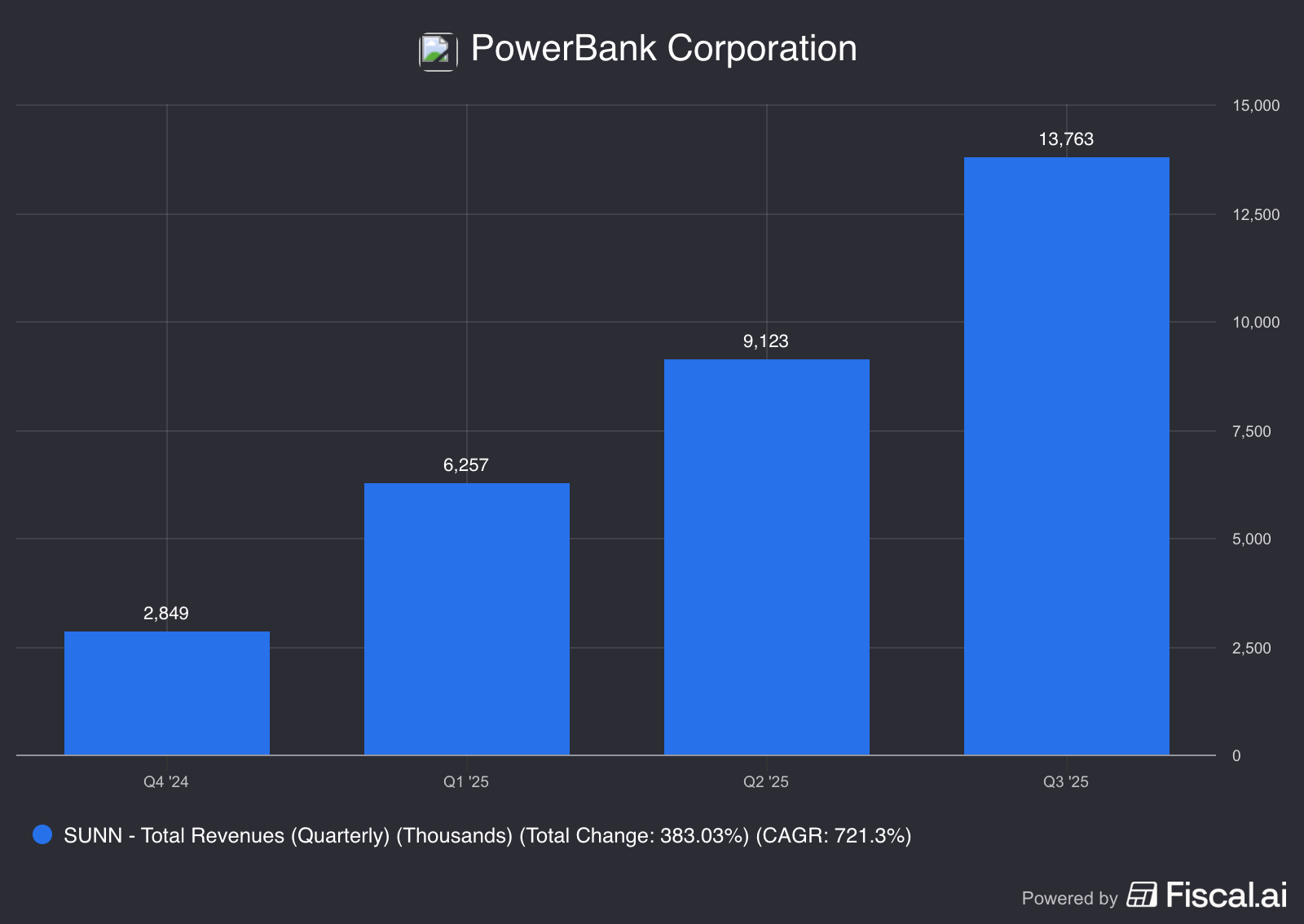
PowerBank generated approximately CA$41.5 million in revenue in fiscal 2025 with improving margins and more than 70 operating assets. Yet the stock trades at a price-to-sales ratio around 2.
For comparison, energy companies with similar recurring revenue potential often trade at significantly higher multiples once their owned asset base reaches scale. PowerBank is entering that phase now, with recurring IPP revenue growing and new assets under construction.
Institutional investors have begun to take notice. Holdings from UBS, Morgan Stanley, and Baader Bank indicate early accumulation—often a precursor to broader market awareness.
The opportunity ahead
PowerBank is operating in one of the fastest-growing segments of the global economy. From community solar to industrial energy systems to grid-connected storage, every part of the company’s business aligns with policy incentives, commercial demand, and the structural rise in electricity consumption.
Yet the valuation remains in early-stage territory, while the business itself is transitioning into a mature, revenue-generating platform.
For investors watching the seismic shift underway in energy and artificial intelligence, PowerBank represents a rare chance to participate at a formative stage, backed by real customers, real assets, and real cash flow.
Disclosure: This newsletter was created on behalf of PowerBank Corporation and sponsored by the company. It is not financial advice. Cashu Technologies was compensated two thousand dollars by Connect 4 Marketing. Always perform your own due diligence and consult a licensed financial professional before making investment decisions.
There are several risks associated with the development of the projects disclosed in this report. The development of any project is subject to receipt of a community solar contract, receipt of required permits, the availability of third-party financing arrangements for the Company and the risks associated with the construction of a solar power project. In addition, governments may revise, reduce or eliminate incentives and policy support schemes for solar power, which could result in future projects no longer being economic.
This report contains forward-looking statements and forward-looking information within the meaning of Canadian securities legislation (collectively, “forward-looking statements”) that relate to the Company’s current expectations and views of future events. Any statements that express, or involve discussions as to, expectations, beliefs, plans, objectives, assumptions or future events or performance (often, but not always, through the use of words or phrases such as “will likely result”, “are expected to”, “expects”, “will continue”, “is anticipated”, “anticipates”, “believes”, “estimated”, “intends”, “plans”, “forecast”, ”projection”, “strategy”, “objective” and “outlook”) are not historical facts and may be forward-looking statements and may involve estimates, assumptions and uncertainties which could cause actual results or outcomes to differ materially from those expressed in such forward-looking statements. In particular and without limitation, this report contains forward-looking statements pertaining to the Company’s expectations regarding its industry trends and overall market growth; the Company’s growth strategies the expected energy production from the solar power projects mentioned in this report; the timeline for construction; market outlook for solar energy; the receipt of interconnection approval, permits and financing to be able to construct the Projects; the receipt of incentives for the Projects; and the size of the Company’s development pipeline. No assurance can be given that these expectations will prove to be correct and such forward-looking statements included in this report should not be unduly relied upon. These statements speak only as of the date of this report.
Forward-looking statements are based on certain assumptions and analyses made by the Company in light of the experience and perception of historical trends, current conditions and expected future developments and other factors it believes are appropriate, and are subject to risks and uncertainties. In making the forward looking statements included in this report, the Company has made various material assumptions, including but not limited to: obtaining the necessary regulatory approvals; that regulatory requirements will be maintained; general business and economic conditions; the execution of definitive documentation for the CIM transaction; the satisfaction of all conditions precedent for the CIM transaction; the Company’s ability to successfully execute its plans and intentions; the availability of financing on reasonable terms; the Company’s ability to attract and retain skilled staff; market competition; the products and services offered by the Company’s competitors; that the Company’s current good relationships with its service providers and other third parties will be maintained; and government subsidies and funding for renewable energy will continue as currently contemplated. Although the Company believes that the assumptions underlying these statements are reasonable, they may prove to be incorrect, and the Company cannot assure that actual results will be consistent with these forward-looking statements. Given these risks, uncertainties and assumptions, investors should not place undue reliance on these forward-looking statements.
Whether actual results, performance or achievements will conform to the Company’s expectations and predictions is subject to a number of known and unknown risks, uncertainties, assumptions and other factors, including those listed under “Forward-Looking Statements” and “Risk Factors” in the Company’s most recently completed Annual Information Form, and other public filings of the Company, which include: the Company may be adversely affected by volatile solar power market and industry conditions; the failure to execute definitive documentation for the CIM transaction; the failure to satisfy all conditions precedent for the CIM transaction; the execution of the Company’s growth strategy depends upon the continued availability of third-party financing arrangements; the Company’s future success depends partly on its ability to expand the pipeline of its energy business in several key markets; governments may revise, reduce or eliminate incentives and policy support schemes for solar and battery storage power; general global economic conditions may have an adverse impact on our operating performance and results of operations; the Company’s project development and construction activities may not be successful; developing and operating solar projects exposes the Company to various risks; the Company faces a number of risks involving Power Purchase Agreements (“PPAs”) and project-level financing arrangements; any changes to the laws, regulations and policies that the Company is subject to may present technical, regulatory and economic barriers to the purchase and use of solar power; the markets in which the Company competes are highly competitive and evolving quickly; an anti-circumvention investigation could adversely affect the Company by potentially raising the prices of key supplies for the construction of solar power projects; foreign exchange rate fluctuations; a change in the Company’s effective tax rate can have a significant adverse impact on its business; seasonal variations in demand linked to construction cycles and weather conditions may influence the Company’s results of operations; the Company may be unable to generate sufficient cash flows or have access to external financing; the Company may incur substantial additional indebtedness in the future; the Company is subject to risks from supply chain issues; risks related to inflation and tariffs; unexpected warranty expenses that may not be adequately covered by the Company’s insurance policies; if the Company is unable to attract and retain key personnel, it may not be able to compete effectively in the renewable energy market; there are a limited number of purchasers of utility-scale quantities of electricity; compliance with environmental laws and regulations can be expensive; corporate responsibility may adversely impose additional costs; the future impact of any global pandemic on the Company is unknown at this time; the Company has limited insurance coverage; the Company will be reliant on information technology systems and may be subject to damaging cyberattacks; the Company may become subject to litigation; there is no guarantee on how the Company will use its available funds; the Company will continue to sell securities for cash to fund operations, capital expansion, mergers and acquisitions that will dilute the current shareholders; and future dilution as a result of financings.
The Company undertakes no obligation to update or revise any forward-looking statements, whether as a result of new information, future events or otherwise, except as may be required by law. New factors emerge from time to time, and it is not possible for the Company to predict all of them, or assess the impact of each such factor or the extent to which any factor, or combination of factors, may cause results to differ materially from those contained in any forward-looking statement. Any forward-looking statements contained in this report are expressly qualified in their entirety by this cautionary statement.